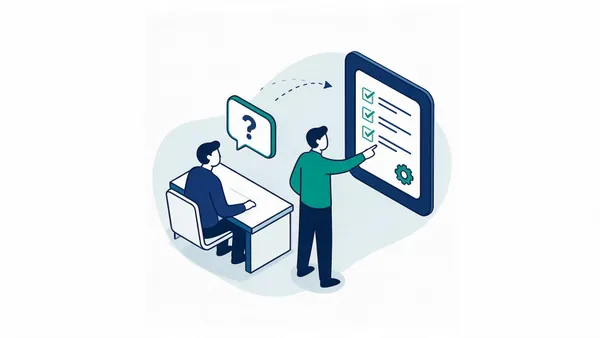


Most enterprise AI governance still works the same way it did for traditional software: build the system, ship it, then write a policy document describing how it’s supposed to be used. That sequence made sense when software only ever did what a person clicked. It stops making sense the moment the system itself can take an action — submit a request, update a record, move money — without a human in the loop for every step.
The policy-document problem
A policy that lives outside the system depends entirely on people remembering to follow it. It can say who’s allowed to see what, how long data should be retained, or which decisions need a second sign-off — but none of that is actually enforced unless someone builds the enforcement back into the software separately, and keeps it in sync every time the software changes. In practice, that sync slips. The policy says one thing; the system, under deadline pressure, quietly does another.
What “in the execution path” actually means
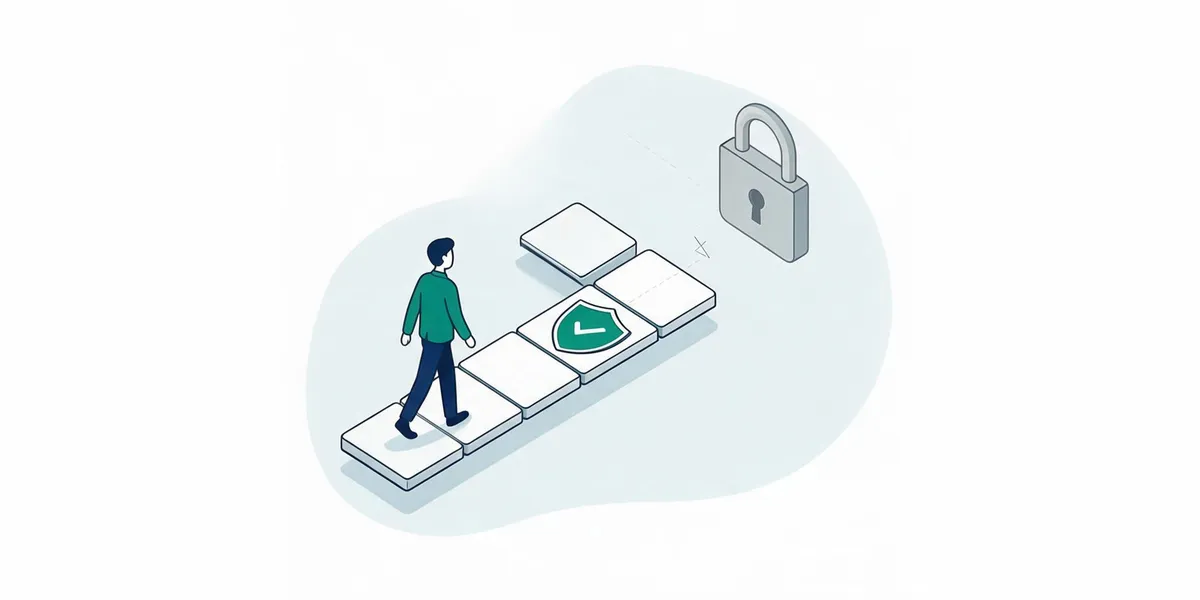
The alternative is to make governance a property of how the system runs, not a document that describes it. Masking, consent, data residency, retention, and audit logging sit inside the same path every action already takes — which means the controls apply whether a person triggered that action or an AI agent did. There’s no separate “AI governance layer” bolted on top that can drift out of sync with what’s actually executing, because there’s only one path, and everything runs through it.
This is also why the audit trail question matters more than it sounds. If governance is enforced in the execution path, every action already has a record of what happened, why, and under whose authority — because that record was a required part of taking the action in the first place, not a log file someone has to remember to check.
Autonomy should be a dial, not a leap
The other governance mistake is treating AI deployment as a binary — either a human approves everything, or the system runs unsupervised. Neither extreme is usually right on day one. A more workable pattern is to start wherever an organization’s governance is actually comfortable (a system that assists but never acts on its own), and move toward more autonomy only as the audit logs earn that trust — without having to re-implement anything to get there. The workflow stays the same; what changes is how much of it runs without a person confirming each step.
What to check before you deploy
A few concrete questions surface most of the gap between a real governance posture and a policy-document one: Does every action — human-triggered or agent-triggered — pass through the same controls, or are there two code paths? Is the audit trail a byproduct of execution, or a separate logging step someone has to remember to add? And can autonomy be dialed up incrementally, with evidence, rather than switched on all at once? If the honest answer to any of these is “it depends on who built that part,” governance isn’t in the execution path yet — it’s still a document sitting next to it.
Conclusion
Certifications like ISO 27001 and ISO 42001 are a useful external signal, but they describe a management system, not a guarantee that every individual action an AI agent takes is actually constrained by it. The only way to know that’s true is to check where the enforcement actually lives — inside the path every action takes, or beside it.